
Devotional
Students at our school are given many meaningful opportunities to engage with the devotional aspects of our philosophy throughout their learning journey. With four terms in the school year, we take the opportunity to dedicate each term to focusing on one of the four core Dharmic values. Term 1 is Compassion, Term 2 is Truthfulness, Term 3 is Cleanliness, and Term 4 is Self-Control. School work, projects and discussions will take opportunities where appropriate to centre around the school Term’s core value of focus.
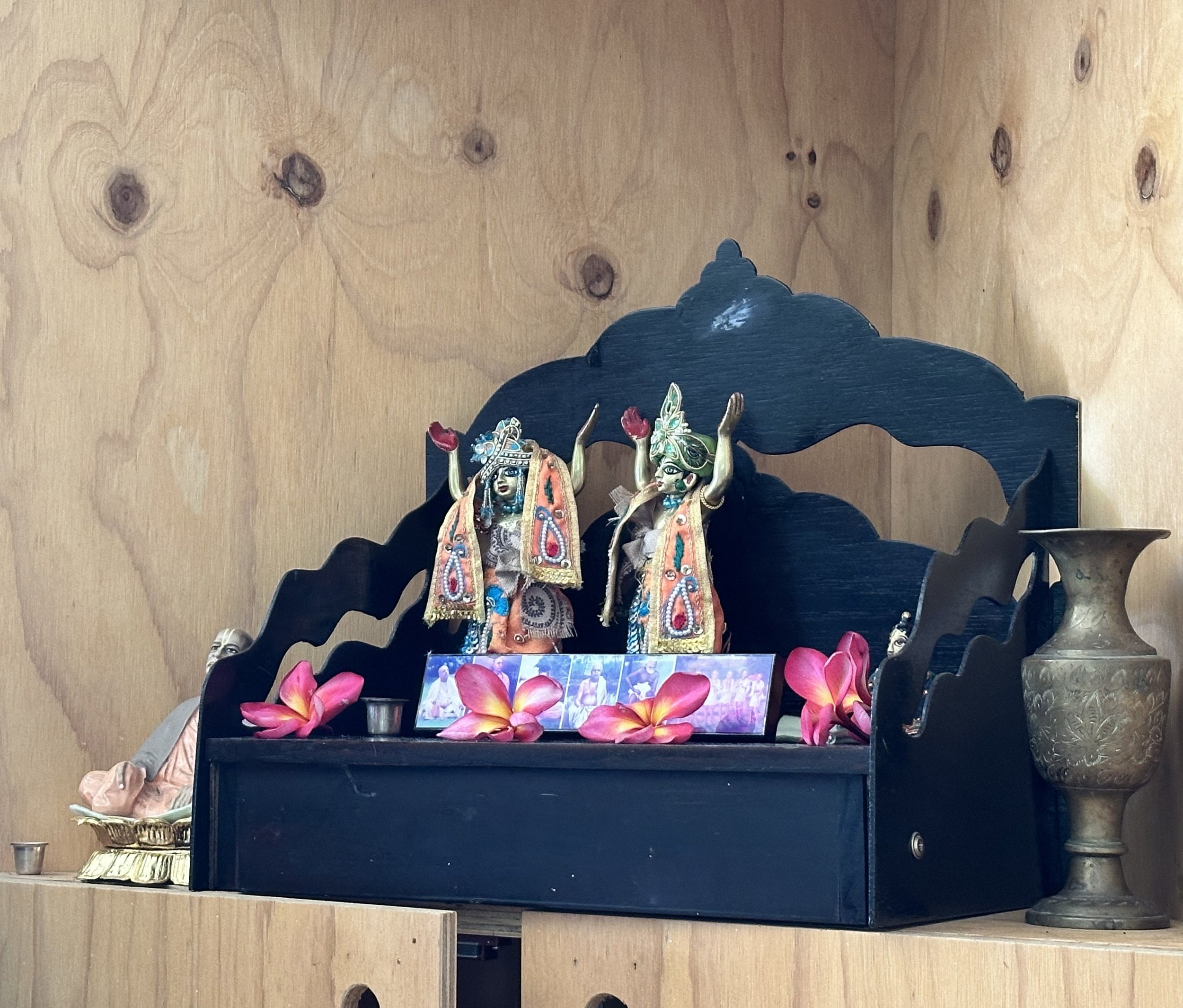
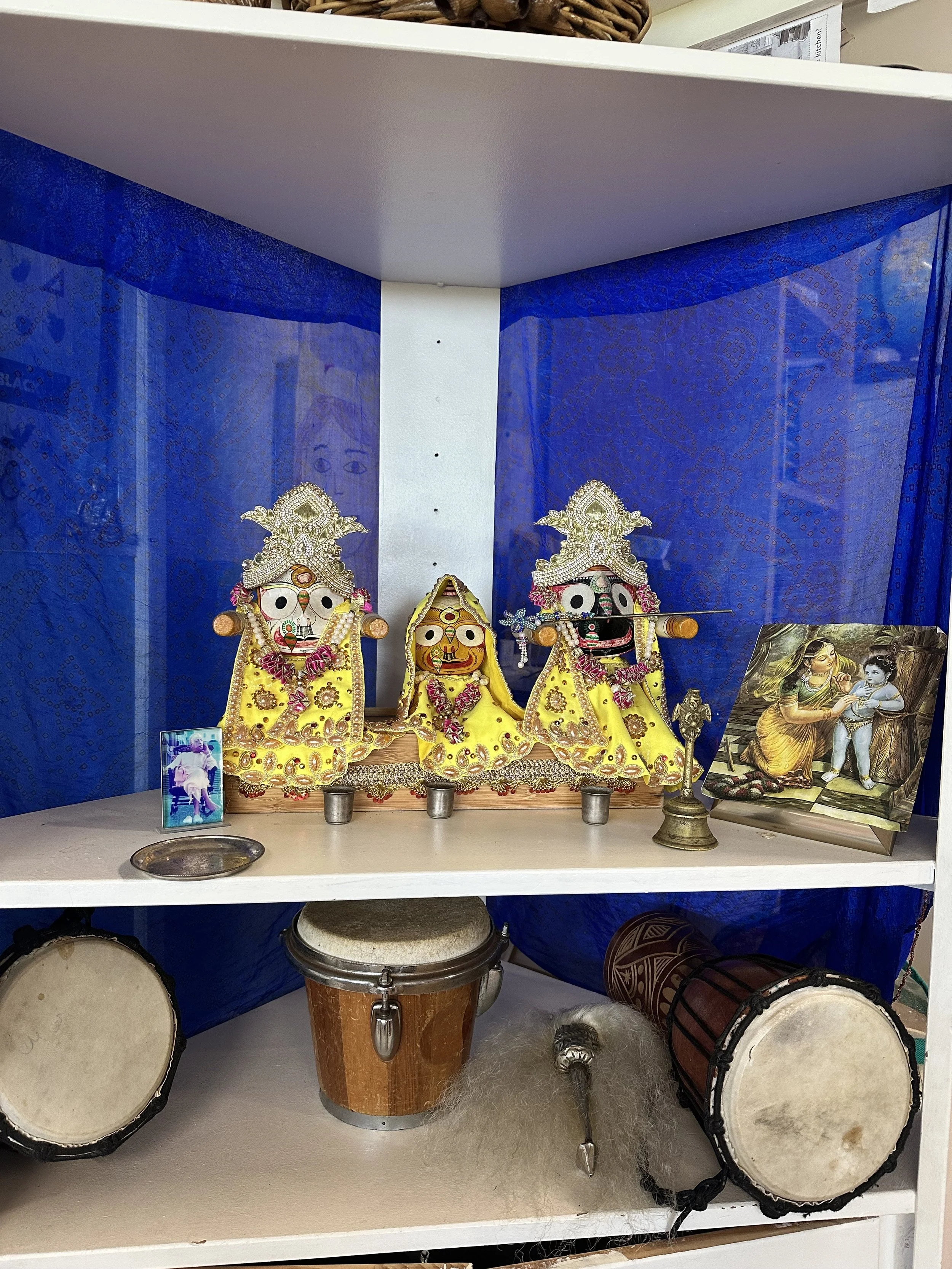
In our school, each class has its own set of presiding deities, which serve as a daily focus for worship and connection:
• Pre-K, Kindergarten & Year 1 (Jagannath Class)----------Jagannath, Baladev, and Subhadra deities.
• Years 1 & 2 (Gaura Nitai Class)--------------------------------Gaura Nitai deities.
• Years 2, 3 & 4 (Krishna Balaram Class)----------------------Krishna Balaram deities.
• Years 5 & 6 (Radha Krishna Class)----------------------------Gaura Nitai deities (Photos of Radha Krishna)
• Year 7-12--------------------------------------------------------------Pancha Tattva deities.
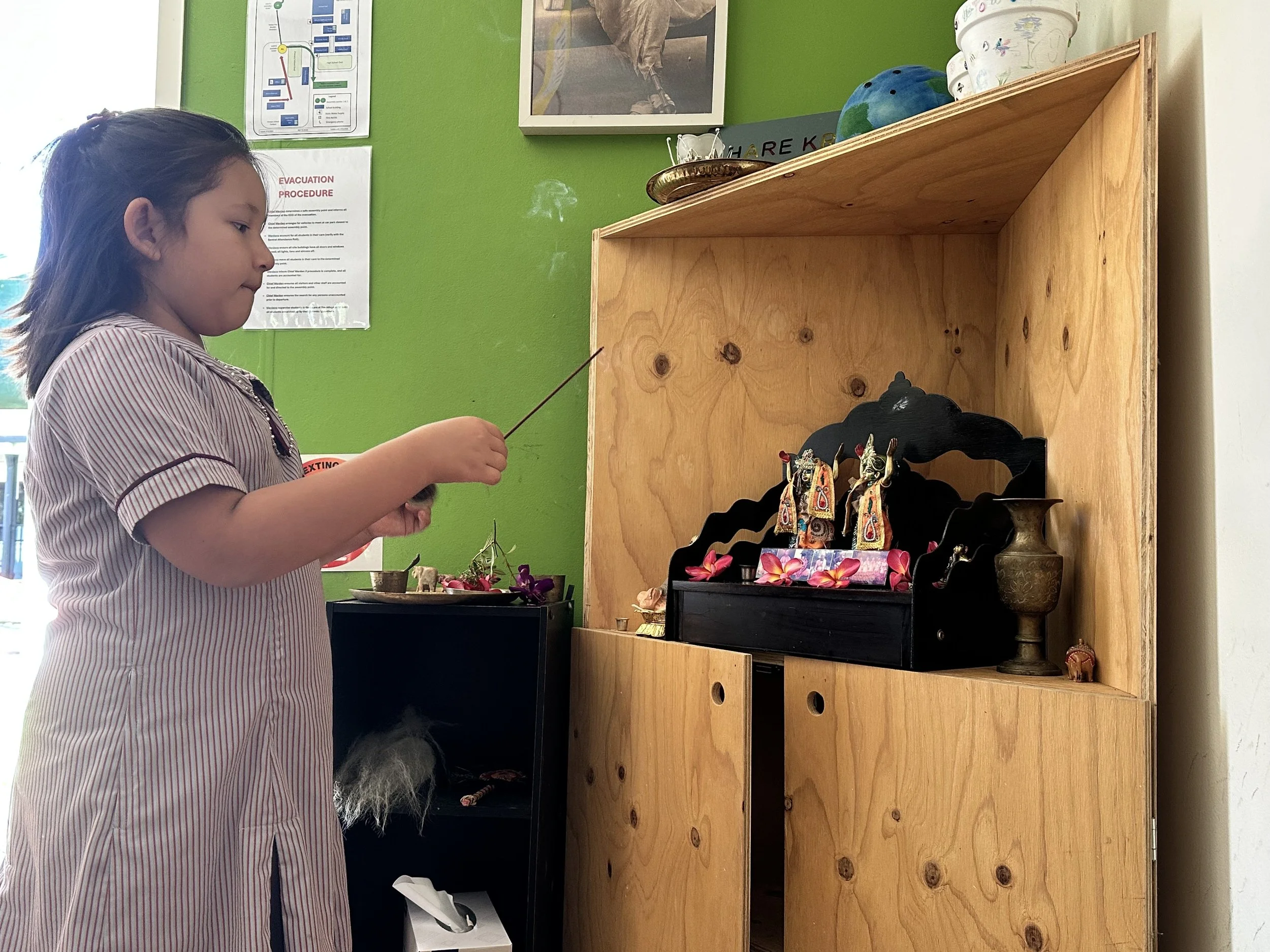
Each morning, students offer a simple kirtan and arati to their class deities. These daily rituals provide a nurturing environment for children to naturally develop their devotional inclinations and build a personal relationship with Krishna.
Further devotional elements are thoughtfully integrated throughout the curriculum. For example, students may engage in creative projects such as producing artwork, drama productions and bhajan performances inspired by upcoming festivals, blending spiritual expression with academic learning.
Our primary school students participate in Vaishnava Studies. In these classes, students learn slokas (sacred verses) from Vedic texts such as the Bhagavad Gita and Srimad Bhagavatam. They not only memorise the verses but also explore their meanings, helping them develop a deeper connection with the wisdom and values found in these scriptures.
Learning takes place through engaging, interactive, and age-appropriate activities that make spiritual education both enjoyable and meaningful. Students also learn bhajans (devotional songs) and hear about the pastimes of Lord Krishna.
This holistic approach supports students in building strong character, appreciating cultural heritage, and developing a lifelong love for learning and spirituality.
Formal scriptural studies are a key part of the high school program. Students in Years 7 and 8 participate in Shastra classes, while those in Years 9 and 10 undertake Bhakti Shastri studies, fostering a deeper understanding of devotional philosophy and personal practice.
The Stage 4 Shastra class focuses on reading from The Krsna Book. The set text tells the story of Krishna’s life from Srimad- Bhagavatam, the summit of the ancient Vedas. This book is presented as a collection of beautiful readable short-stories and illustrations. It forms a biography of the life of Krishna, who was present in India five thousand years ago. The stories develop from Krishna’s birth to His childhood and youth. Krishna plays with His boyfriends in the forest while looking after the cows and calves. The Shastra class also incorporates introductory elements that will be explored in the Bhakti Shastra course in Stage 5.
The Stage 5 Bhakti Sastri course at the Bhaktivedanta Swami Gurukula is focused on expounding the Vaishnava qualities enunciated in the bhakti-shastras from the Mayapur Institute of Higher Education with the knowledge, skills and values present within the teachings of His Divine Grace A.C. Bhaktivedanta Swami Prabhupada. The curriculum is divided into five units covering the four main texts namely, Bhagavad-gita, Nectar of Devotion, Nectar of Instruction and Sri Isopanisad. This course supports students to appreciate and appropriately apply Gaudiya Vaishnava culture and principles.